Prague is a beautiful city that has many attractions you can visit. Some of the most popular are:
The Prague Castle, which is one of the largest and oldest castle complexes in the world. Here you can explore St. Vitus Cathedral, Golden Lane, Old Royal Palace, and more.
Charles Bridge, which is an iconic symbol of Prague. It is lined with baroque statues and offers a breathtaking view of the city and the Vltava River.
Old Town Square, which is the historical center of Prague. Here you can see the Astronomical Clock, Tyn Church, Old Town Hall, and more.
Vyšehrad, which is a citadel by the Vltava River. Here you can see the Basilica of St. Peter and Paul, Rotunda of St. Martin, Vyšehrad Gallery, and more.
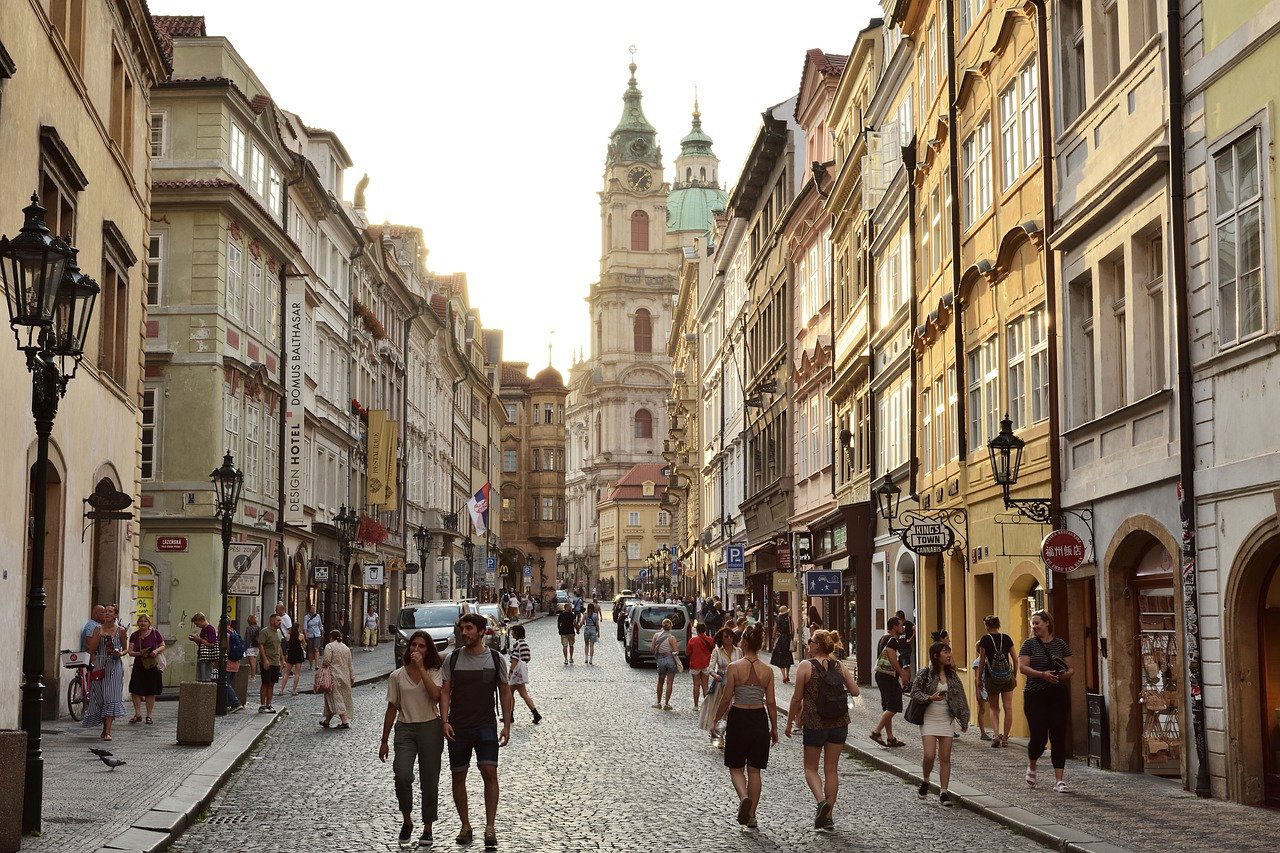
St. Nicholas Church, which is a baroque beauty in Lesser Town. It has an impressive dome, organ, frescoes, and statues.
The history of Prague
is very rich and interesting. Prague was founded in the 9th century as a castle, known as Vyšehrad, and developed as a political, cultural, and economic center of the Czech Republic. Prague has been the capital of the Kingdom of Bohemia, the Holy Roman Empire, Czechoslovakia, and now the Czech Republic. Prague is known for its beauty, architecture, and atmosphere. Some of the most notable periods in Prague’s history are:
The 14th century, when the Czech king and emperor Charles IV made it his capital of the empire and built many monuments, such as Charles Bridge, Charles University, and St. Vitus Cathedral.
The 16th century, when the Czech ruler and emperor Rudolf II turned it into a center of science, art, and alchemy, attracting many artists, scientists, and alchemists, such as Tycho Brahe, Johannes Kepler, and Edward Kelley.
1918, when Prague became the capital of the newly formed Czechoslovak Republic, after the end of World War I and the dissolution of Austria-Hungary.
1968, when Prague was the center of the Prague Spring, a reformist movement that tried to democratize the communist regime, but was suppressed by Soviet intervention.
1989, when Prague was the site of the Velvet Revolution, which overthrew communism and restored democracy and freedom in Czechoslovakia.
1993, when Prague became the capital of independent Czechia, after the peaceful division of Czechoslovakia into two states.